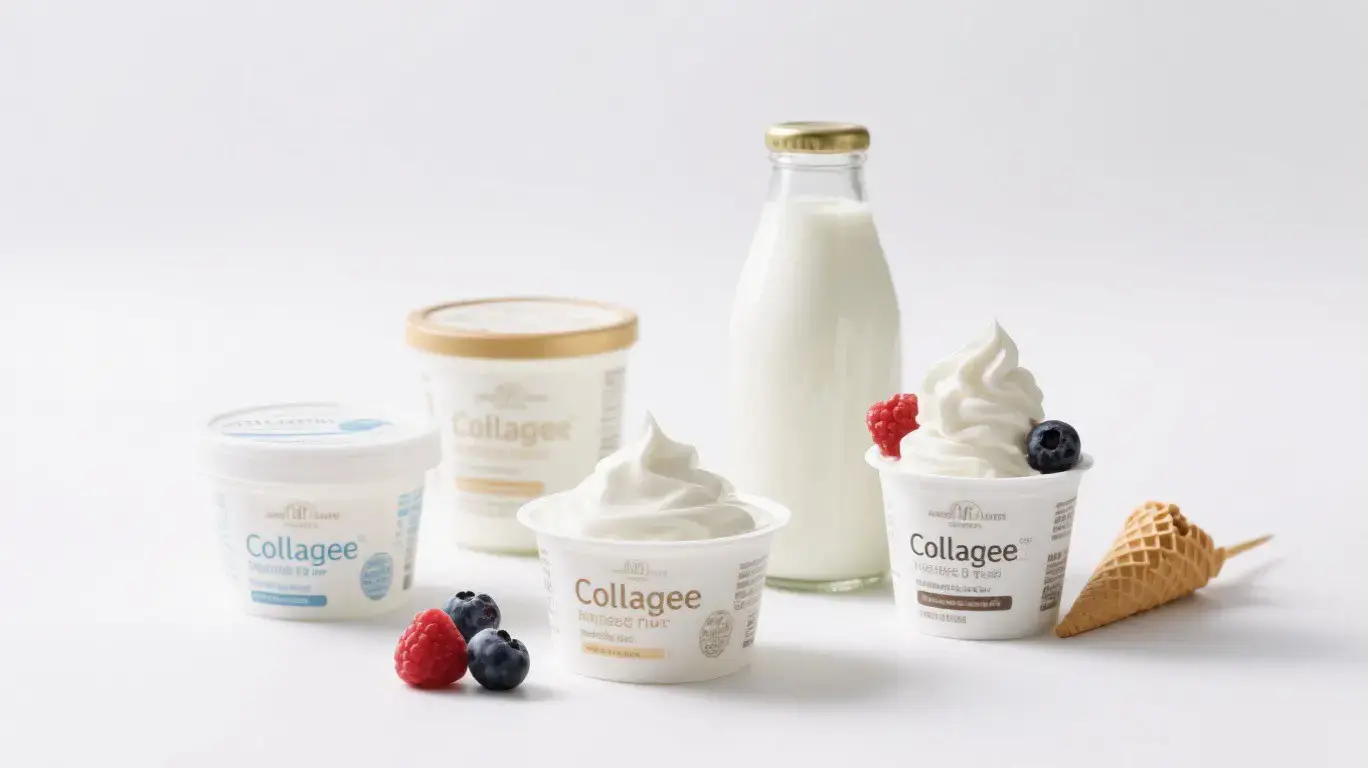
Collagen peptides integrate seamlessly into dairy systems, boosting protein content while improving texture, with stability across fermentation, acid, and heat processing for yogurt, beverages, and frozen dairy.
Boosting protein content and improving texture in dairy products
Collagen peptides integrate seamlessly with dairy systems, boosting protein content while improving texture and mouthfeel in yogurt, drinking yogurt, milk beverages and cream products. Our peptides are heat-stable, acid-tolerant, and compatible with fermentation processes, enabling dairy brands to develop innovative high-protein offerings.
Stable during yogurt and cheese fermentation processes
Stable in acidic dairy environments (pH 3.5-5.0)
Withstands pasteurization and UHT processing
Enhanced creaminess and mouthfeel in dairy products
Stabilizers, protein fortifiers & gelling agents for yogurt, cream desserts and fermented dairy products
Food-grade bovine gelatin with adjustable bloom strength. Delivers smooth gel texture, prevents whey separation and stabilizes panna cotta, yogurt desserts and mousse.
Ideal for: Yogurt mousse, panna cotta, cream desserts, set yoghurt
View DetailsLow molecular weight fish collagen peptide with good thermal stability. Easily incorporated into fermented milk, drinking yogurt and dairy wellness drinks without off-flavors.
Ideal for: Collagen yogurt, functional fermented dairy beverages
View DetailsHypoallergenic rice peptide compatible with dairy formulations. Enhances protein content for mixed dairy-vegan alternatives and gentle nutrition dairy products.
Ideal for: Blended dairy drinks, infant-friendly fermented dairy, plant-dairy alternatives
View DetailsRecommended addition rates and processing parameters for dairy applications
| Product Type | Recommended Dosage | pH Range | Processing Temp. | Addition Point | Stability |
|---|---|---|---|---|---|
| Set / Greek Yogurt | 3–8 g/100 g | 4.0–4.6 | Incubation 42–45°C | Pre-fermentation mix | Stable through fermentation |
| Drinking Yogurt | 3–6 g/100 ml | 3.8–4.5 | Pasteurization 72°C/15s | After fermentation | No sedimentation |
| UHT Milk Beverage | 2–5 g/100 ml | 6.5–7.5 | UHT 135°C/4s | Pre-heat treatment | Heat-stable, no haze |
| Ice Cream | 1–3 g/100 g mix | 6.0–7.0 | Aging 4°C / 4–24 h | Pre-homogenization | Improved overrun |
| Cream / Cheese Product | 2–5 g/100 g | 4.5–6.5 | Pasteurization 72–85°C | Pre-pasteurization | Enhanced creaminess |
Key steps for integrating collagen peptides into dairy production
For yogurt applications, dissolve collagen peptides (3–8 g/100 g) into the milk base before starter culture inoculation. Ensure complete dissolution at 40–45°C under gentle stirring (150–250 rpm). Peptides do not inhibit starter culture activity (S. thermophilus, L. bulgaricus).
Validate peptide stability through your specific thermal process. Our heat-stable peptides withstand pasteurization (72–85°C), UHT (135°C/4s), and in-container sterilization (121°C/15 min). Post-heat-treatment, <5% MW shift and no visible haze or sediment.
Collagen peptides at 3–5 g/100 g reduce whey separation in set yogurt by 40–60%. The peptides increase water-holding capacity within the protein gel network. For maximum effect, combine with standard dairy stabilizers (pectin, starch) at reduced levels.
Add 1–3 g/100 g to ice cream mix before homogenization. Collagen peptides improve overrun (5–10% increase), reduce ice crystal growth during storage, and enhance creaminess perception. Age mix at 4°C for 4–24 hours before freezing for optimal dispersion.
International regulatory status and quality certifications for dairy-grade collagen ingredients
Recognized as GRAS by US FDA for use in dairy products including yogurt, milk beverages and frozen desserts
Compliant with EU hygiene regulations for animal-derived ingredients in dairy and milk products
Dual-certified food safety management system with full HACCP, allergen management and traceability
Dual-certified Halal (JAKIM) and Kosher (OU Pareve) for maximum market access in dairy applications
Explore other Food & Beverage application areas for cross-category product development
Highly soluble collagen and plant peptides designed for clear functional drinks, wellness shots and ready-to-drink beverage formulas.
Learn MoreCollagen peptides serve as protein fortifiers and natural binders for nutrition bars, fruit snacks and portable functional snack formulations.
Learn MoreWe provide professional ingredient matching, formula optimization and customized solutions for various application scenarios to support your product development.